1) In what ways does your media product views, develop or challenge views or conventions of real media products?
 |
(From left to right 1-3 top row, 4-6 middle row and 7-9 bottom row)
Frame 1: The titles start with a dancer in the foreground and the music 'James Bond is Back' composed for the opening of FRWL and used in the HMSS trailer. During the titles, the dancer is placed in front of a projection of the titles in a long shot. She is seen to move in a sensual way and this a known convention of the James Bond franchise.
Frame 2: The next frame has a straight cut transition and it is the title of the film, 'From Russia With Love'. . The font is 'News Gothic' and is consistent throughout the title sequence. The font is in capitals and extremely easy to read. As seen, the dancer moves her hand in a sensual motion in the foreground of the titles and the titles move with her. It gives the feel that the film is going to be elegant and sophisticated in its characters and story.
Frame 3: The next frame shows the first actor in the title sequence, Sean Connery was the actor who played Bond and is obviously the main character due to his name being shown first. It shows his name on the dancers torso as this is clearly the most visible part of her body and lets the audience know who he is. It is also the most provocative part of her body we see in the opening, giving the impression that Bond will get the girl. Connery was near enough unknown as an actor at this point but had worked with some of the production crew prior to the film, this less known name for a main role would have been attractive to avid Bond fans back in the 60's, creating more reason to watch on so they can see his acting.
Frame 4: This next frame shows the names of the other actors who play main characters with important roles in the film but are not as big as Bond's role. This shows the audience who else was involved in the roles as they may see an actor that interests them. All the names of the characters are in different colours to make each name stand out to the audience and are easily seen on the dancer's body.
Frame 5: The next frame shows the first name of the production team behind the scenes and shows the name of Peter Hunt who was editor for the film. His name is put first as he has the most important role behind the producers Saltzman & Broccoli. Hunt gained recognition for his film editing techniques when he utilized quick cutting, allowing camera swings during action and inserts interleaving other elements while working as editor on the Bonds.
frame 6: The next frame shows the next two production workers on the back of the dancer. These next two roles are massively important but not as much as the editor. But without the adaptation of the book by Johanna Harwood and the Screenplay writing by Richard Maibaum, the film wouldn't have been able to be made. This can be shown that their names are across a large empty surface area that they barely take up, maybe implying that they had a huge job but they were only two people.
Frame 7: This frame shows the name of the composer of just the title music that the audience would be listening too. Lionel Bart was a majorly known composer who had previously worked on songs with Cliff Richard and mainly stuck to pop production. He had won 3 'Ivor Novello' awards prior to the production of FRWL and therefore was a big role in making the titles of the film.
Frame 8: The next frame finally shows the names of the two producers of the Bond films who produced 7 bond films over 12 years together, FRWL being their second film together. These two producers were known to turn low budget films into high grossing extravaganzas and the audience seeing these names would know they're in for a good film. Both Broccoli and Saltzman went on to produce separate Bond films independently with Broccoli producing another 4 Bond films from 77-83 and Saltzman making 3 in the early 70s. In the titles we see the dancer shaking the most provocative part of her body in the title sequence and it is know that the two producers were in charge of the title sequence and that they employed a director who purposely carried on the theme of scantily clad women throughout the Bond series.
Frame 9: The last frame of the title sequence shows the name of director, Terence Young, who was the biggest reason for Sean Connery's stardom and blossom of his career. Prior to the Bond films,. Young had worked with Saltzman and Broccoli on other productions and therefore there was an understanding on how each other worked and a strong chemistry as they kept Young on the team. Viewers would know Young from acclaimed films in the 50's and know that Young was good at his job. Young's name was near enough the same colour as Ian Fleming's name above the title at the beginning of the sequence implying they are of same calibre in their writing and direction. Young nearly died in a helicopter crash whilst filming FRWL and was rescued by fellow crew members. It was known that Young then got back behind the camera thirty minutes after the incident and carried on filming. The viewers would know this dedication to the film and know it was made to the best standard it could be.

(From left to right 1-3 top row, 4-6 middle row and 7-9 bottom row)
Frame 1: In the first frame of our film, we decided to use the MGM background with our own twist of using an actor to be the lion and doing the roar movement with the roar in the background, to create a slight humorous tone so that views would know the film was intended to be 100% serious from the start. We used MGM as they're a world known distributor and production company for James Bond and for other films across the world. We also used this because we wanted to stick the the James Bond theme and use a recognizable logo that is a real world convention to give it more of a movie feel.
Frame 2: In this frame, we used a hand-drawn picture taken from the idea of artist Shawn Powers and drawn by me. We used a man playing a saxophone and used jazz music in the background, that was also used in our preliminary task and our group agreed on using it again. The titles to James Bond usually have some sort of Jazzy song so we wanted to stick to the conventions of the titles. We also used the flame light in the preliminary and James Bond is also known to smoke, so we decided to use the natural light from the flame to give the titles a warmer feel to them.
Frame 3: This is the first frame when Fong is introduced to the viewers and we started off with him walking on Gravel with the start of the theme tune in the background. We did this so that viewers could get the feel that he was going somewhere, maybe a mission for example and gave a perfect opportunity to feature an establishing shot of him. This is different however from the original James Bond titles as they rarely feature action and actual scenes involving actors. But we did this so the whole title sequence wasn't names and kept it interesting for the viewer. I feel that this change in convention was best suited to our groups abilities and interests.
Frame 4: The next frame is one of four name titles throughout our opening. Every few seconds in the long gravel walk sequence, we cut to black and featured the name of each member of our group, with the continuous music and gravel sound effect. As seen from the frame, it plainly states the group members name in the same font used throughout FRWL on a black screen. Normal conventions are that the role of the member of the production team is shown above their name but I felt as editor that I wanted to stay to the minimalist theme throughout our opening with our lack of dialogue and extensive use of music syncing. The use of just the members name personally makes me feel like the audience would be interested in who did what and I feel that not showing the roles gives the implication that the film was more of a team effort to the audience, which is usually unseen in most films. This is also seen in Frame 4 of FRWL when it shows the names of the extra actors but not their roles.
Frame 5: This frame shows the clothing of our films star and slowly pans up to show the traditional suit that a spy would wear in films. We made it so that Fong had a suit with a bow tie, which is what Sean Connery was wearing in FRWL. We wanted to stress that this was the main character from the beginning to ease any confusion among viewers. We used a silver suit apposed to James Bond's regular black suit as it made him stand out more amongst the villains in their black suits.
Frame 6: This here is the longest frame in the film and it features Fong 'riding the gate' as he is being briefed on his mission by his superior. This scene is abnormally long for a title sequence and its nature makes for a humorous change to the action of normal spy movies. This is a change to the action code as a viewer would not expect the scene to be shot how it is. The scene is long as it would make no sense to cut it down and would cause confusion amongst viewers. This is also ironic as James Bond and other spies usually use sneaky methods and aim to be conspicuous when entering somewhere they shouldn't be.
Frame 7: In this frame, we see the establishing shots of the villain in their suits and the theme tune changes to the popular 9th Symphony by Beethoven. We used this due to the change in mood in our film and that we decided not to follow the convention of using the theme tune throughout. We used a red tie for this villain as it portrays to the audience that they are the bad guys and the colour red suggests blood and violence. This is both semantic and symbolic code seen by the dark colour of the suit and what it means. This is seen throughout FRWL as the Russian baddies were known as the 'Reds'
Frame 8: This frame is the final action frame in the introduction and it shows Fong jumping out on the Villains with his catchphrase. We decided to change up the traditional catchphrase that James Bond used and we also made our actor say the phrase in Chinese, sticking to the theme of our title. We decided to point the gun at the screen to give the effect of the villains perspective and that foreshadowing of the gun barrel scene. We decided to use a blue plastic gun so the audience could easily see it wasn't real. This is different from the conventions of normal action films as props used, such as guns, are made to look as real as possible to create authenticity in the scene but we decided to stray from this to give a more humorous feel to the film and so that the audience knew the scene was safely made.
Frame 9: The last frame in our introduction is the titles on the film based exactly on the original 'Ian Fleming's: From Russia With Love'. I made it so that the same font was used as the original title and the colour scheme was the exact same. The layout and sizing of the words was also the exact same but changed into our titles. As seen, it says 'Scott Coller's' although he was not the author he was the producer meaning he was in charge and I wanted to give the film a more authentic feel to it whilst staying true to the original titles.
2) How does your media product represent particular social groups

Within our film opening, we featured our main character based on James Bond as a male as it pretty much unseen to have female spies, with the extreme exception of some films. This is probably based on the fact that men usually possess the harder jobs whilst women take up menial jobs with minimum danger. This is the same as all James Bond actors have all been male. All Bond characters, although played by different actors, have all been portrayed to be smooth and suave characters who attract all the women. We didn't feature any relationship scenes but we did try to adopt a mix of suave movement but funny things that a normal spy wouldn't do; for example, Fong riding the gate which is not in the character's nature but then he steps off and adjusts his suit and smoothly walks away, showing the more cool side of the character. Spies are usually very precise in their movements and have an elegant nature about the way they work but in our film we feature a scene where Fong is rolling about on the floor in a typical spy manor but without the elegance. Which we also intended. We decided to give our character the best mix of a suave personality whilst making him clumsy in some actions. This is a mix of cool spies such as James Bond and Clumsy spies such as Johnny English. Stereotypical spies are known to be very well dressed, in either a suit or a tuxedo or something similar. In our we decided to go with the bow tie, to stick to the convention of FRWL as seen above but decided on a silver suit so the characters could be easily distinguishable to the audience. Even from the making of FRWL in the 60's to now, spies are still known to wear suits so it was appropriate for our group to wear them.
3) What kind of media institution might want to distribute your media product and why?
Here is a link to a YouTube video. It involves a voice over of myself detailing what institutions I can use to fund, produce and distribute my film: http://youtu.be/l3ccnG9ERE0
4) Who would be the audience for your media product?

This is Matthew Crocker. He is a fine gentleman who is 17 years of age and lives in Medway. Matt spends his time going to wine tasting events across the globe and likes to relax every now and then by sitting down and watching a James Bond marathon with a glass of the finest wine he can find. Matt is also interested in the violin and plays it at an intermediate level. Matt loves sophistication and this is seen when he only settles for Kettle Chips, the best around. Matt frequently sports suits and tuxedos and anything smart. Matt loves films such as 'The Spy Who Came In From The Cold' and 'Notorious'. However, aside from the serious spy films, he enjoys the funnier side of 'Austin Powers' and 'Johnny English'.. making our film perfect for him. Matt enjoys the music of Beethoven and Mozart whilst sitting infront of a warm fire place in his silk red robe with his feet on his tiger skin rug whilst writing poetry.
I believe our film would appeal to the likes of Matt as he is a big fan in spy movies and if our film was to appear in a cinema near him, i believe he would be down there to watch it.
5) How did you attract/address your audience?
Here is a post for how I researched my audience, so I had a clear insight on how to address them. I used teenage males around the age of 16-18 to answer my questions. (Note: Pictures may need enlarging to be read, just click on the picture to do this.)
   This is the link to the attract/address video I created using the 'annotate' button on YouTube: https://www.youtube.com/watch?v=MYRr2fUz284
6) What have you learned about technologies from the process of constructing this product?
Editing:
In using Sony Vegas, I discovered how to piece together many clips of film to create a sequence and how to overlap this film with music clips. I learnt how to fade to black and use effects for each clip if needed. I learnt how to cross-fade clips meaning that as one clip would end, another would begin. In using Sony Vegas, it made me realise the importance of music syncing with the film clips. I learnt how to cut down sound clips and adjust their sound to lower as a scene would fade to black or action would occur. I also learnt how to crop, re-size and flip a video clip or a picture in the program. For our MGM opening sequence, i figured out how to crop down the video of Yuxin to fit into the open space and placed the picture above the video in the timeline to create a composition.

Camera:
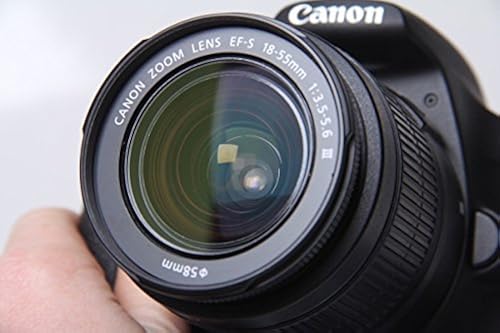
In filming, I discovered how important using a tripod really was to keep the video completely still to make it look more professional. I discovered that importance of the angles you're filming at to make it clear to the audience as possible yet make them interested. I learnt that using an SLR camera is massively better than using a handheld camcorder as the quality in picture is far greater and allows for better control over focus whilst filming.
Memory stick:
I discovered how essential a memory stick was for keeping all our used and un-used footage together in separate folders and keeping all our pictures and sound files and effects in all their separate folders too. I realised that the computers we were using were massively cluttered with irrelevant files so keeping everything I needed on one device was one of the most important technologies.

Computer:
I discovered this was one of the most important technologies in the making of the opening to our film as it stored the editing program that we used and we transferred all our files from the memory stick to the editing program through using the computer. I learnt how essential a computer was as there would be no film without the computer as it is the only was to make and export the film to YouTube or to a separate disk.
.jpg)
Podcast kit:
This equipment was essential as it allowed me to be able to record my voice and place the sound file over the YouTube video as a requirement for a question. I then used Audacity to edit the sound files recorded to the sound I want them at.
.JPG)
7) Looking back at your preliminary task, what do you feel like you have learnt in the progression from it to main product?
Here is a link to our preliminary: www.youtube.com/watch?v=G8rr3Msp3Jw
Our preliminary is massively different to our main task, as seen in the information below.
Editing
The main feature in difference would be the editing progress in which both films were made. Due to my lack of understanding of editing, I was un-aware of high level programs so I stuck with Movie Maker which is all I knew how to use. There was more of a montage feel to the Preliminary. When it came to placing the clips in an understandable fashion, I did it to the minimum and made it so that you had a slight understanding of what was going on, yet trying to keep the audience what would come next. This is massively different compared to the Main task where I spent massive amounts of time structuring the clips to a point where I became sick of doing it. I wanted to make sure that the film made complete sense to the audience. In the preliminary, I picked music that I had available to me at the time, being Beethoven and a jazz song, that I grew to like and decided that they fitted well. Whereas in our Main Task, I went out of my way to make sure I had the James Bond theme tune that I wanted and as a decision by our group, we decided to put the Beethoven song back in. All music used in both films was not copyrighted. There was more of a focus in our Main Task that the music would match up to the on screen actions. I made this happen as personally as a viewer to films, I like the concept of music matching up with whatever's happening. I felt this was implemented well in our main task compared to our preliminary where I just chucked clips in and put music on top of them. A huge new feature in the Main Task was titles. In our preliminary, we lacked any sort of titles whereas in our Main Task I made the film titles out of the original from our influential film so they looked identical. I feel like this gives our Main task a more official feel compared to our preliminary. A big difference between the two would be how much time I spent editing on each. The preliminary was fairly simple and I finished rather quickly, however our Main task took me longer than I could even work out. I spent a huge amount of time trying to get the film to how I wanted it and trying to perfect it as much as I could, which led to inevitable frustration, taking longer to complete it.
Camera/Camerawork
We used the same SLR camera in both of our films but the biggest difference between our preliminary and main task is the difference in the quality I rendered the films at. Although the same quality films were produced, I was able to render at 1080-24p at 6MBPS. Our preliminary wasn't rendered and was able to be viewed straight away on Windows Media Player and then was converted to a file that was able to be uploaded to YouTube. Camerawork didn't really change from the preliminary to Main task other than we wanted good establishing shots as we actually had a story to tell in the main task. We see a mix of really short clips and long clips throughout both preliminary and main task. Examples of this are seen in the first scene of our preliminary and in our main task when Fong 'rides the gate'.
Props/Costumes/Setting
Both the Preliminary and Main task were set at our school as it was easily accessible due to the whole group being together most days. In our Prelim, we used a pinecone found on the grounds of the film whereas in the Main task we used a toy gun I had laying about. The gun, I feel, had more relevance as a prop in our film as it made sense as to why it was there. We took much more care with costumes in our Main task. This is because we wanted the film to have a more official feel to it, and make it seem like a real spy film as it wouldn't have felt right if the actors did the clips in normal clothes.
Written\Published by Harry Young
|

No comments:
Post a Comment